On News
Or, how reading less of current events can be more fulfilling.

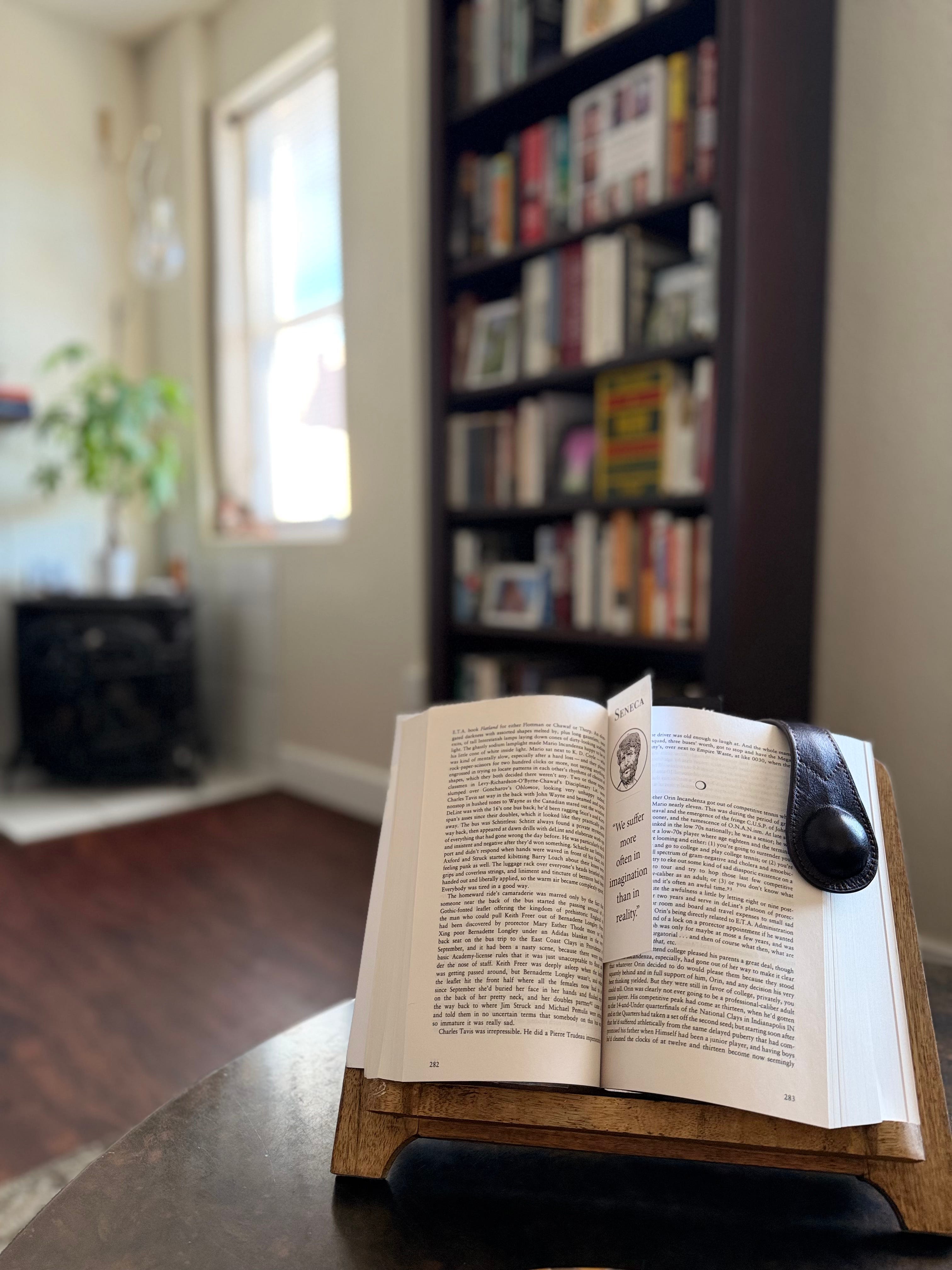
Recently, I decided to take a break from the news.
All of it.
Last week, I removed the New York Times and Apple News widgets, deleted podcasts from my devices—and honestly, it’s been better.
Quieter, too.
And, yes, I know.
For many whom read this, my actions feel almost heretical.
The whole idea of this effort is writing about current events.
How can I write about current events if I am not reading them?
The stoic philosopher Epictetus himself warned us:“If you wish to improve, be content to appear stupid or clueless in extraneous matters—don’t wish to seem knowledgeable.”
This line has stayed with me in these last few weeks.
What is the real difference between being informed, engaged and aware versus just feeling the need to say something witty or smart?
We all have the urge to scroll.
To post a response.
To feel validated.
The Gentle Loop
In our relationship with the news, we often fall into a familiar rhythm.
Each day we read, listen, and absorb—hoping that this article or that podcast will finally bring clarity, perspective, or resolution.
To us.
And I suspect, to others as well.
But by the next morning, we find ourselves back where we started, returning again to the same questions, the same tensions, the same headlines—seeking understanding in matters largely beyond our control.
And then we do it again.
News widgets, apps, and podcasts offer a subtle bargain: even when we aren’t actively engaging with them, they remain present, hovering at the edges of our attention.
They are designed not just to inform us, but to keep us close.
Can I really focus on a French lesson while worrying about the latest headline out of Minneapolis?
Does listening to another podcast from our favorite liberal or conservative armchair critic actually help me show up better for our children—or our neighbor?
Does it shape me into a better person here, now?
Reclaiming Attention
Seneca, perhaps speaking from experience, once observed: “The mind that is anxious about the future is miserable.”
To be clear, I’m not miserable.
I live a good life.
Writing creatively and working with others is a genuine gift.
And no—I’m not simply replacing news consumption with endless rounds of Solitaire or Subway Surfers (though the latter is surprisingly fun).
Even as I write this on a weekend, I genuinely don’t know what’s happening in the world.
And you know what?
If something truly catastrophic occurs, I trust my partner or friends will tell me.
What I am learning is this:
I’m learning to appreciate the gentle return of the tonearm on my record player, quietly reminding me to flip the LP.
I’m lingering with the prescient words of David Foster Wallace—and imagining what he might say about our modern addictions.
I’m more present in conversations.
And, with a little help from ChatGPT, I’m reading more.
Working from a photo of my bookcase, I asked it to help curate a yearlong reading list—pairing fiction and nonfiction each month with the aim of stretching my mind while steadying my soul.
Books like Lincoln in the Bardo.
The Old Man and the Sea.
After Virtue.
Some were rereads. Many were not.
And when a recommendation overlapped with something I’d already finished, I simply substituted from the ever-growing list of titles waiting patiently on my Goodreads shelf.
Here’s the thing: I don’t know if this experiment will change my life.
I don’t know if it will move the needle in any dramatic way.
But as Walter Mosley once noted: “I’m not saying you have to be a reader to save your soul in the modern world. I’m saying it helps.”
So here’s to more pages turned.
Pen in hand.
And, yes, a little less noise.
Well said, my friend.